
Rites, festivals and living memory
In the Lucanian Apennines National Park Val d'Agri Lagonegrese, traditions are not simply calendar events, but a living heritage that is renewed every year, intertwining faith, nature, history and community identity. Here, time still seems to follow the ancient rhythm of the seasons, agricultural and pastoral cycles, and great popular devotions, offering visitors an authentic story deeply rooted in the places and people.
Between spring and summer, the Park becomes the setting for some of the most evocative tree rituals in southern Italy, ancient ceremonies that have their roots in pre-Christian fertility cults and which, over the centuries, have been reinterpreted and absorbed by Christian devotion. It is a collective liturgy that celebrates the alliance between man, nature and the sacred.
The tree, the backbone of this symbolic universe, becomes a veritable bridge between heaven and earth, from which a festive and shared energy seems to emanate. Emblematic of this is the Festa della 'Ndenna in Castelsaraceno, which takes place in June under the protection of St Anthony of Padua. A large beech tree, the 'Ndenna, and a fir tree, the Cunocchia, are chosen in the woods and transported to the village in a long and lively procession. In the square, the symbolic 'marriage' of the trees takes place, followed by the spectacular climbing of the smooth trunk by young people. The tree will remain standing until autumn, when it will be cut down and distributed to the community.
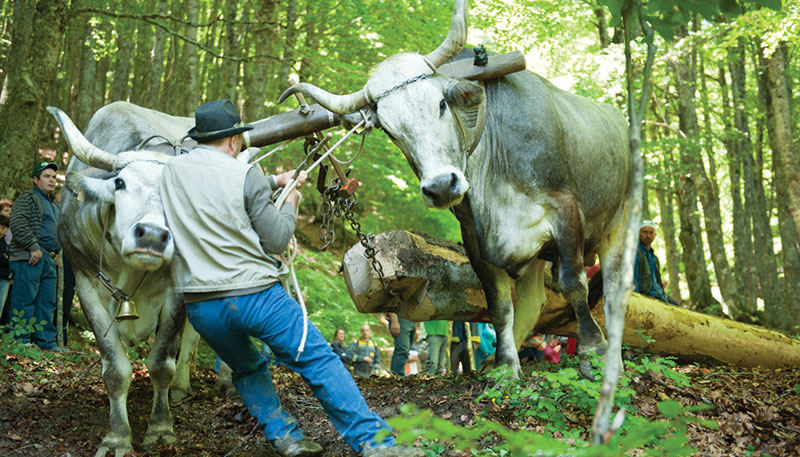
The transhumance festivals, which involve several municipalities and celebrate pastoral culture through walks, stories, music and tastings, are also deeply linked to the rural world. These are opportunities to rediscover ancient knowledge and symbolic products such as Podolico caciocavallo cheese or Canestrato di Moliterno cheese, in a continuous dialogue between past and present, between memory and identity.
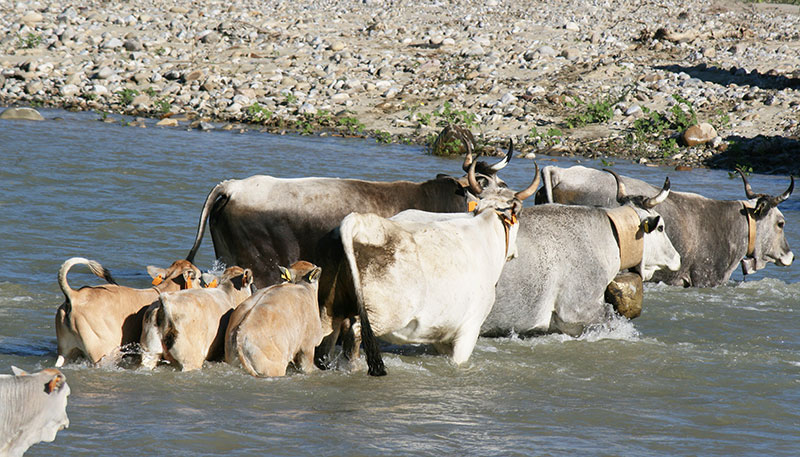
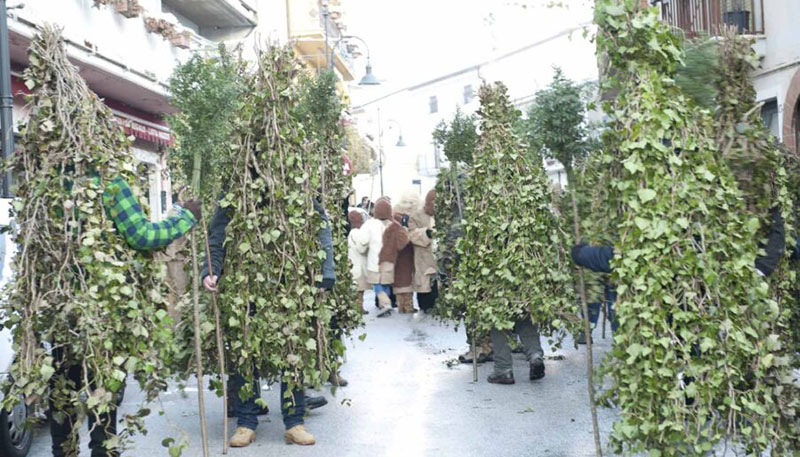
Carnival is one of the most intense moments of this ritual heritage, a suspended time that marks the transition from winter abundance to Lent. Among the most fascinating and symbolic carnivals in Italy is that of Satriano di Lucania, guardian of the famous Carnevale dei Rumit. Here, the archaic figure of the tree man, covered in ivy, comes to life, symbolising the primordial link between man and the forest. Once upon a time, the Rumita would descend silently into the village to ask for food and bring good luck; today, this gesture has been transformed into a collective ritual of extraordinary evocative power. Since 2012, hundreds of Rumit have paraded together, creating a 'walking forest', a symbol of rebirth, fertility and respect for the environment. Alongside him are other traditional masks, such as the Bear, Lent and Zita, which tell the story of the transition from chaos to order, from social redemption to the reversal of male-female roles. It is no coincidence that in 2021, this Carnival was recognised as one of Italy's historic Carnivals.
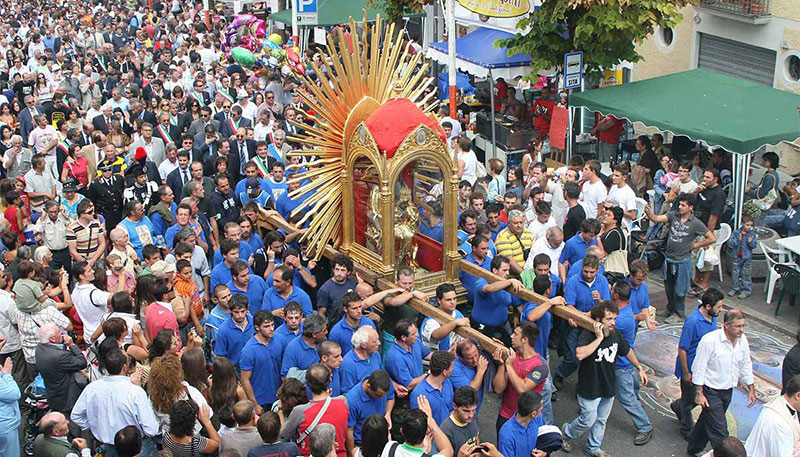
Religious devotion permeates the entire territory and shapes a veritable sacred geography, centred above all on Marian worship. The pilgrimages that unite valleys and mountains are among the most intense and identity-defining rituals of the Park. The most emblematic case is Viggiano, the spiritual heart of Basilicata: every year, on the first Sunday in May, the Black Madonna is accompanied on a long and arduous journey from the Basilica of Santa Maria alle Mura to the Sanctuary of Sacro Monte, where she remains throughout the summer. In September, the statue returns to the village, welcomed by a huge crowd. A journey of faith that has been repeated for centuries and combines prayer, song and physical sacrifice.
Similar rituals mark the life of many other towns: in Abriola, the Madonna is accompanied to the Sanctuary of Monteforte on the first Sunday in June and brought back to the village on 15 August; in Calvello, the Sanctuary of the Madonna del Monte Saraceno is the destination of one of the most heartfelt processions in the region on the second Sunday in May, accompanied by ancient Benedictine chants; in Armento, the Madonna della Stella is the protagonist of a double pilgrimage between May and September; in Lagonegro, the Madonna del Sirino travels along picturesque mountain paths; in Moliterno, Montemurro, Sarconi, Spinoso, Grumento Nova, Marsicovetere and San Martino d'Agri, between May and September, the ritual pattern of the Virgin's double dwelling is repeated, with celebrations that combine ascent and return, spirituality and civil festivities. During these devotional walks, the faithful often collect small tufts of Stipa austroitalica, the delicate silky plant known as 'Madonna's hair' or 'angel's hair', considered a sign of protection and now protected as a species of Community interest. A simple gesture that combines faith, nature and ancient beliefs.
In Pignola, devotion to the Madonna takes on a spectacular and deeply symbolic form with the ritual of the 'Uglia'. For over half a century, in May, the sacred image has been accompanied to the Mother Church through the narrow streets of the village between imposing bonfires of broom, the 'fanoie', veritable barriers of fire that slow down the procession in a ritual that represents the eternal struggle between good and evil. Amidst music, wine and collective cheering, the bearers cross the burning embers in a crescendo of emotion that transforms the procession into a powerful representation of identity. In September, the Madonna returns to the Sanctuary, welcomed by an evocative night-time torchlight procession.
In Laurenzana, 16 July is the day dedicated to Our Lady of Mount Carmel: the procession passes through the streets of the village accompanied by singing, devotion and emotion. This period also sees the historical re-enactment of the 'Palio Carmelitano', in which the four districts - Santa Filomena, San Michele, San Giacomo and San Giorgio - compete in games reminiscent of medieval rivalries.
Alongside Marian cults, patron saint festivals of great intensity continue to be celebrated. In Brienza, since 1238, the solemn feast of the Holy Cross has been celebrated, with an evocative ritual in May and a return in September. In Abriola, on 14th February, St. Valentine, the highly venerated patron saint, is celebrated: between processions and large bonfires of broom, the fucanói, the village comes alive with music, singing and conviviality. In Pignola, on 17 January, the feast of Sant'Antonio Abate features races with horses, mules and donkeys, testifying to the deep bond between man and working animals.
Traditions are also expressed through historical re-enactments, major musical events and food and wine festivals that tell a story of work, ingenuity and community, such as the Passeggiata nella Storia (Walk through History) in Marsico Nuovo, which commemorates the visit of St Thomas Aquinas in the 13th century, or in Viggiano, the Rassegna dell'Arpa Viggianese (Viggiano Harp Festival) in August and the Rassegna delle Zampogne e Ciaramelle (Bagpipe and Ciaramella Festival) in December, which restore sound to a central role in the identity of the territory.
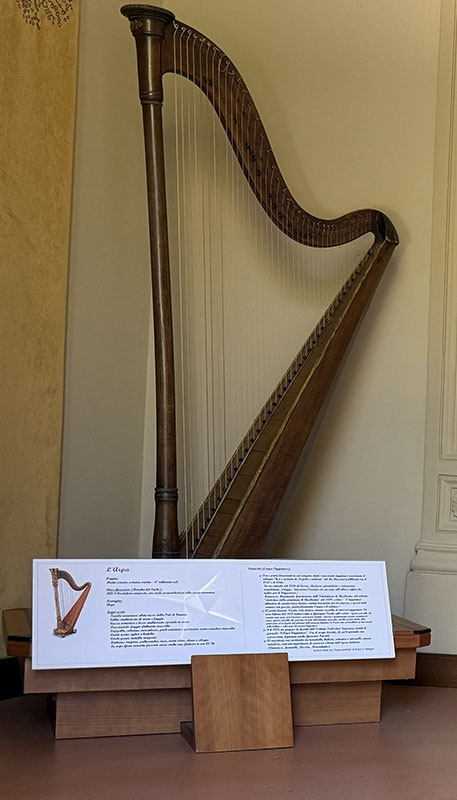
Completing this rich mosaic are the ancient crafts, born from the intimate dialogue between man and landscape: activities that have shaped the territory and local identity, marking the passing of the seasons and daily life. Today, they remain as a living memory, a trace of shared knowledge that has transformed hard work into culture and labour into belonging.
In the Lucanian Apennines Park, traditions are never static: they are rituals that walk, climb, return and transform. An intangible heritage that continues to speak to the present, preserving the profound sense of belonging and the indissoluble bond between man, nature and the sacred.