
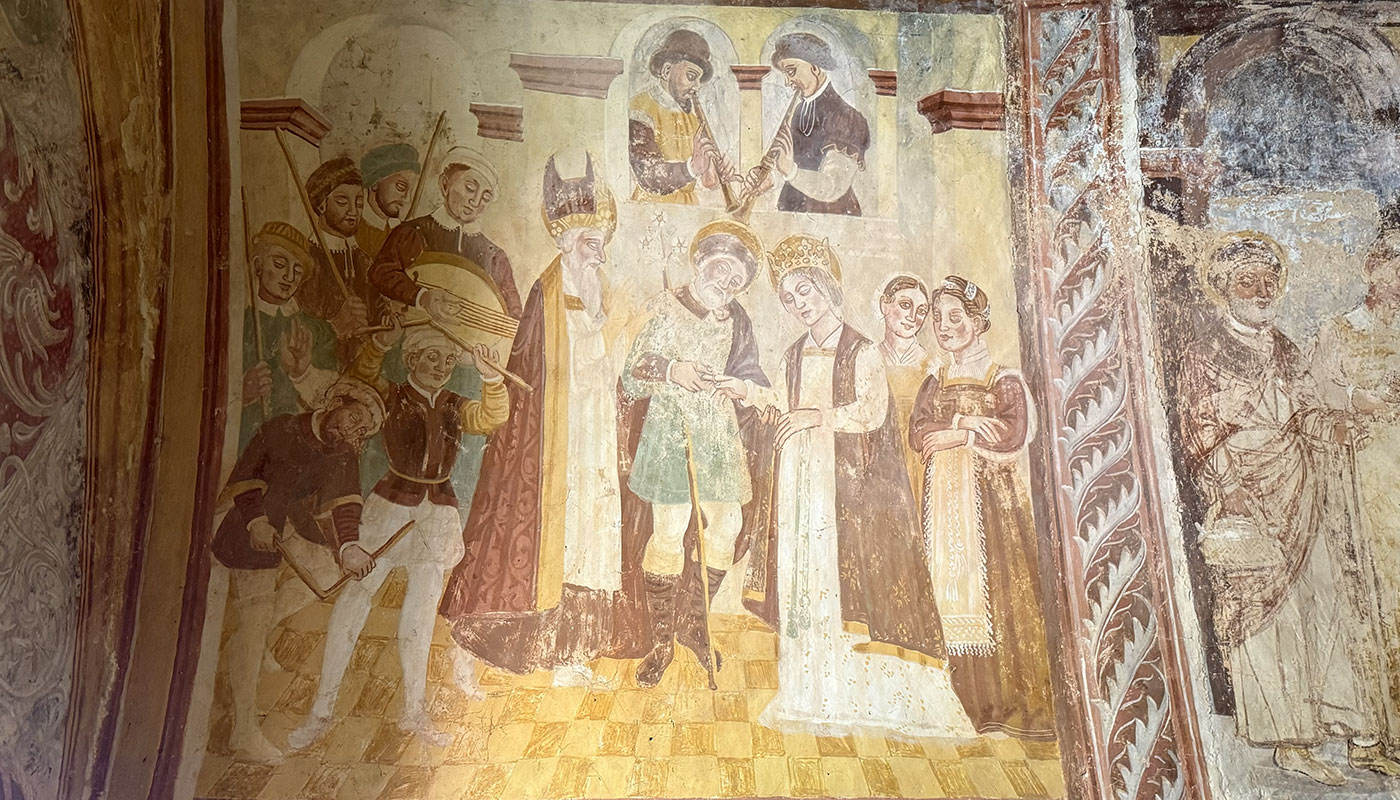
Giovanni and Girolamo Todisco
Between the sixteenth and early seventeenth centuries, Giovanni and Girolamo Todisco, painters from Abriola and probably father and son, or at least relatives, emerged as sensitive interpreters of Lucanian identity, capable of portraying Basilicata through images deeply rooted in the local landscape and culture.
Giovanni Todisco trained in the first half of the 16th century, drawing on the experience of various artists, including Giovanni Luce da Eboli. His pictorial language, initially linked to a linearity of Gothic ancestry, gradually evolved towards Renaissance models, based on a solid perspective construction of space, more structured volumes and greater expressiveness of the figures. This formal growth was accompanied by a marked sensitivity to portraiture, which led him to carefully describe interiors, objects and the inner emotions of his characters, in keeping with the tastes of the Lucanian elite of the time.
His work is widespread throughout the region: from the cloister of the monastery of Santa Maria di Orsoleo in Sant'Arcangelo, signed and dated 1545, to the frescoes in Anzi, Laurenzana, Cancellara and Rivello; from the works in Senise, Potenza and Venosa to Abriola, his birthplace. An artistic itinerary that crosses villages, convents and churches, providing a vivid image of 16th-century Basilicata. Emblematic are the decorations of the convent of Sant'Antonio in Rivello, where in 1559 he painted The Last Supper, set in an elegant and perspectively constructed room, enriched with symbolic details and references to everyday life and local products.
Alongside Giovanni worked Girolamo Todisco, active between Potenza and Matera in the early decades of the 17th century, who took up this legacy and renewed it in the light of the new demands of naturalism. In the pictorial cycles, for example, of the convent of Sant'Antonio in Rivello and in the Adoration of the Shepherds in the mother church of Laurenzana, Girolamo introduced a more direct and intense style of painting, influenced by Caravaggio's teachings. The sacred scenes take place in recognisable landscapes, populated by shepherds, everyday objects and gestures that bring the Gospel story closer to real life.
In both Todisco's works, the sacred merges with the human and Basilicata becomes the protagonist of the story: a land observed with attention, narrated through faces, landscapes and traditions that transform art into a veritable cultural map of the Lucanian territory between the Renaissance and the Baroque.