

Nemoli
The ancient forest, between nature and devotion
Nestled between the mountains and the sea, just a few minutes from Maratea and at the foot of the Sirino massif, Nemoli is one of the most charming villages in the Noce Valley and represents one of the natural gateways to the Lucanian Apennines Val d'Agri Lagonegrese National Park. The village extends over an area of extraordinary landscape variety, surrounded by imposing mountains such as Monte Sirino, Serra Rotonda, Serra Lunga, Coccovello and Roccazzo, which form a natural amphitheatre of great charm.
The link with nature is already inscribed in the name: Nemoli derives from the Latin nemus, 'forest', a reminder of a past when the area was covered with dense forests of oak, chestnut and alder trees. Precious remnants of these ancient woods still survive today - from Sterpina to Ischia Grande, from Isola del Bosco to Tempa Castagna - offering immersive trails among centuries-old beech trees, grassy clearings, fragrant broom and a rich and discreet fauna.
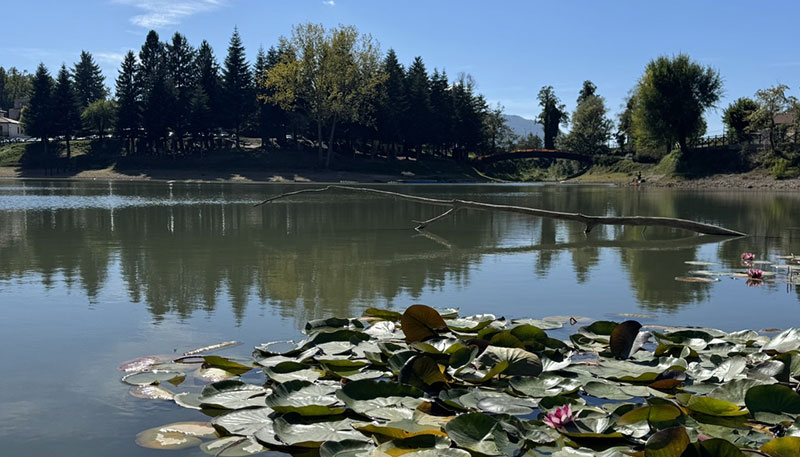
The naturalistic heart of the area is Lake Sirino, one of the environmental jewels of the Park, nestled at the foot of the mountain of the same name and the last remnant of a Pleistocene lake that covered the entire Noce Valley in prehistoric times. Its clear waters, fed by natural springs such as those of Sambuco and Torbido, represent an oasis of coolness and tranquillity, and precious archaeological finds have been discovered along its shores. Here you can enjoy sport fishing, thanks to the presence of trout, tench and perch, or walk or mountain bike along scenic trails, enjoying views that stretch from the Lucanian Apennines to the Tyrrhenian Sea. In the winter months, the Sirino area is transformed into a fully equipped ski resort, with slopes for downhill and cross-country skiing, snowshoeing, Nordic walking and other snow activities, making Nemoli an ideal destination in all seasons.
The origins of the village date back to ancient times: traces of human settlement date back to the 5th century BC, as evidenced by votive bronze figurines found in the area, testimony to the existence of an ancient sacred place. In the Middle Ages, the village was known as 'Il Bosco' (the forest) and gravitated first towards Lauria and then towards Rivello. It was only in the 19th century, with a Bourbon decree, that it took on its current name of Nemoli (Nemus-olim, 'once a forest'), obtaining administrative autonomy in 1834. Over the centuries, the village experienced periods of growth linked to the presence of Basilian monks, the arrival of Waldensian communities in the 17th century and, subsequently, economic development favoured by the Strada delle Calabrie, which made Nemoli a lively transit and trading post.
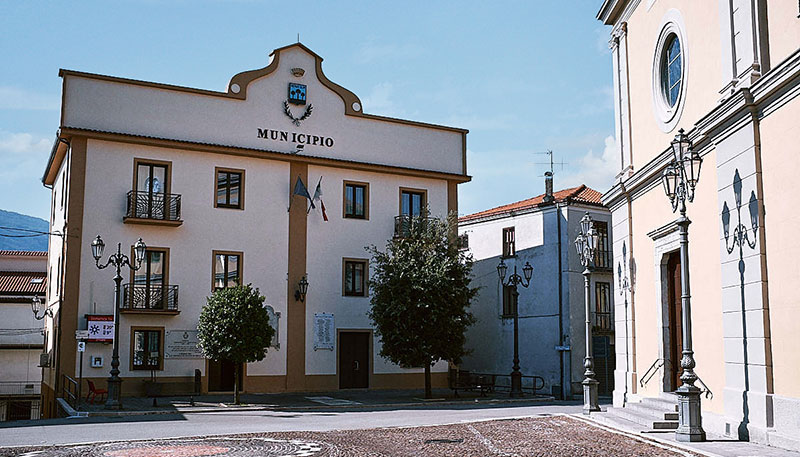
Walking through the historic centre, characterised by a network of alleys, steps and arcades, one can see the signs of this layered history. Eighteenth-century palaces, arches, balconies and carved stone portals - the result of the expertise of local craftsmen - convey the image of a simple but harmonious village. Among the civil buildings, Palazzo Filizzola (18th century) stands out with its elegant Neapolitan-style loggia, while among the examples of industrial archaeology, an ancient water mill survives, the only one of its kind in the Noce Valley.
The religious heritage is also of great importance. The Mother Church of Santa Maria delle Grazie, built in the 17th century, houses a precious polychrome wooden statue of the Madonna della Consolazione dating back to the 14th century, clearly inspired by Byzantine art, placed in a niche above the high altar. The statue and other objects were found in a storeroom, probably hidden there by monks. The artistic collection is completed by a refined 16th-century holy water font and an evocative rose window made by Florentine master glassmakers. In the vicinity of the village, the Chapel of the Madonna del Lago, which houses works from the Neapolitan school and a wooden Christ made by craftsmen from Ortisei, and the Sanctuary of the Madonna della Neve on Mount Sirino, a destination for heartfelt pilgrimages and a panoramic viewpoint of extraordinary beauty, are well worth a visit.
The Carnival is a very popular event in Nemoli and one of the most eagerly awaited moments of the year: the streets of the village come alive with the polenta festival and the parade of frazzuògn, traditional masks that dance to the sound of folk music. It is a collective celebration of irony, conviviality and strong flavours, where symbolic dishes such as 'rafanata', strascinati with sausage sauce and sweet fried crespelle are never lacking. Here, cooking becomes a ritual, music accompanies the entire cycle of the year, and instruments such as bagpipes, shawms, accordions and troccole give voice to the most solemn and playful moments of community life.
Between the Apennine mountains and the blue Tyrrhenian Sea, Nemoli is now an authentic destination, combining nature, history and traditions. It is a place where the slow pace of the woods meets the vitality of the mountains and where each season offers a different but always welcoming face of this fascinating community in Basilicata.