

Montemurro
Portrait of a village between memory and art
Montemurro - which appears suddenly, when the road gently climbs and the woods open up to reveal the still blue waters of Lake Pertusillo - lies on sandstone spurs that plunge towards the valley, as if it were born to observe the Lucanian Apennines and its expanses of olive groves, vineyards and chestnut woods from above. From its natural viewpoint, the gaze runs freely over the large artificial lake that blocks the course of the Agri, now a destination for hikers, fishermen, birdwatchers and simple travellers in search of profound silence.
The village has an ancient history, marked by Saracen raids that forced the inhabitants of Grumentum to take refuge higher up. Thus, around the year 1000, Montemurro came into being. It was known as Castrum Montis Murri and was home to a community of Basilians, protected by a medieval castle and intertwined with the Sanseverino, Carafa and Montesano families. Over the centuries, the town has shared the wounds and rebirths of Basilicata: the earthquake of 1857, the great landslide of 1907, and the earthquake of 1980. But each time, Montemurro has come back to life, clinging to the mountain like a tree that refuses to yield.
Strolling through the narrow streets, you will come across the Convent of St. Anthony of Padua with its 17th-century frescoed cloister and the adjoining Church of the Assumption, which houses important 17th- and 18th-century paintings, a wooden crucifix (1600) and a 17th-century sculptural group representing Our Lady of Sorrows and St. John. Just outside the centre, a path leads to the ancient Dimase oil mill, a precious testimony to the art of oil production in Basilicata, now enhanced with multimedia displays. And as the road climbs further, reaching the Serra di Montemurro, the Sanctuary of Maria Santissima di Servigliano welcomes pilgrims with its history of faith and rebirth, suspended between sky and mountains. Home to an ancient 15th-century statue of the Madonna and Child, every second Sunday in May the sanctuary is the destination of a procession that accompanies the sacred image from the village to the mountain, while in September the journey is made in reverse.
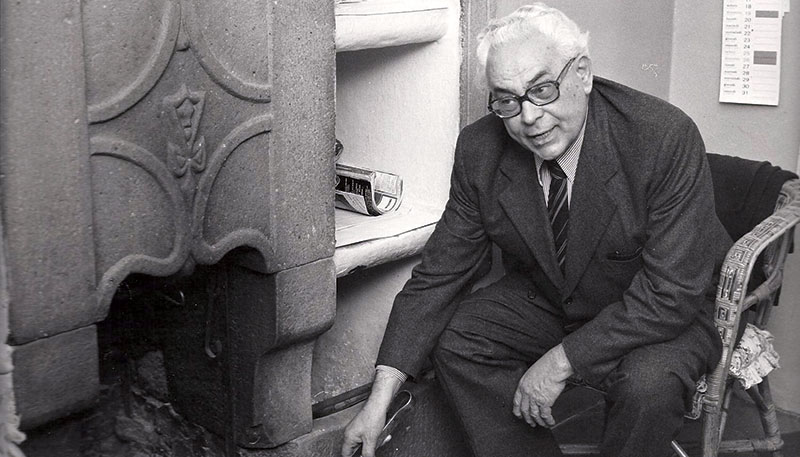
Montemurro is the birthplace of illustrious citizens who have left a deep mark on Italian culture: Leonardo Sinisgalli (Montemurro, 1908 - Rome, 1981), one of the most original personalities of the 20th century, capable of moving naturally between poetry, mathematics, technology and art, who wanted to return here - forever - among 'streams, vineyards and stones', as he wrote in his verses. The town has dedicated the Casa delle Muse (House of the Muses) to him, which houses his books, his drawings and his notebooks full of insights. Here, visitors can discover the Sinisgalli who worked with Olivetti, Pirelli, Alitalia and ENI, bringing art to industry and industry to culture. He was an intellectual capable of inventing the magazine 'Civiltà delle Macchine' (Civilisation of Machines) and imagining a future in which technology and poetry could belong together. Not far away, the memory of Giacinto Albini bears witness to the village's role in the Lucanian uprising of 1860, while the multi-layered graffiti created by Giuseppe Antonello Leone transforms the alleys into an open-air museum.
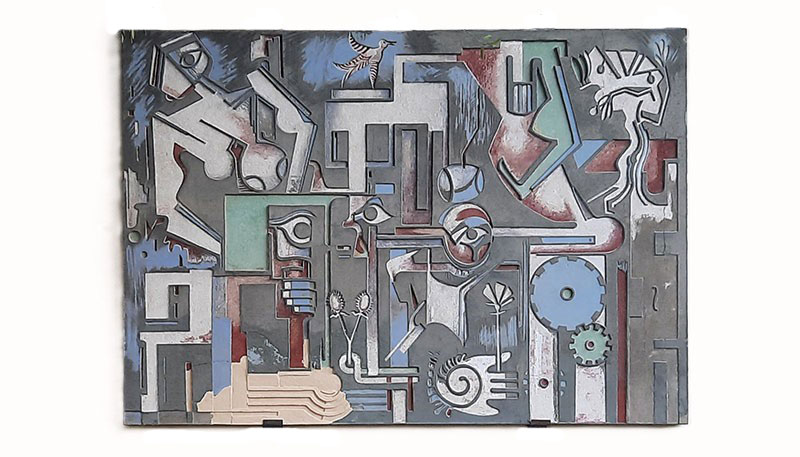
Montemurro is also the land of the painter and writer Maria Padula (Montemurro, 1915 - Naples, 1987), who returned here every summer, attracted by the special light of the village, the hills that change colour and the discreet presence of the woods. Her works and novels preserve the feminine, ethical and sensitive soul of this part of Lucania. Her story is that of a woman who lived through the 20th century with her gaze turned towards her homeland. She was not only a painter: Padula was also a great storyteller. Her books - from Il vento portava le voci (The Wind Carried the Voices) to Il paese è paese d'inverno (The Village is a Village in Winter) - paint a portrait of a Lucanian society in transformation, with the delicacy of someone who observes, understands and recounts without judgement. Her writing is populated by women, houses, villages, seasons, and the toil and grace of everyday life. She passed away in 1987 and is buried in Montemurro. The following year, she was posthumously awarded the Olympus International Prize in recognition of a figure who became a reference point for art, literature and civic engagement.
This is Montemurro: a place that speaks through nature, art and its most luminous figures, and which still today gives travellers a sense of time passing more slowly, more deeply.