

Armento
History, sacred places and cultural identity
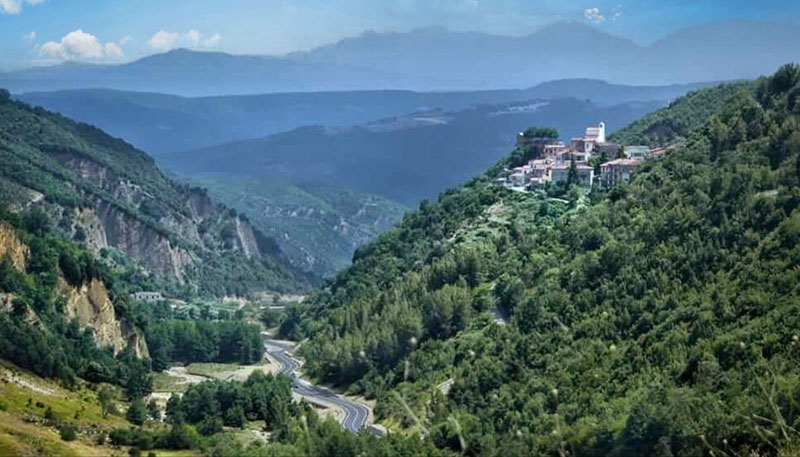
Armento is a small village nestled in the beautiful landscape of the Lucanian Apennines Val D'Agri Lagonegrese National Park. Not far from the village is Lake Pertusillo, an artificial reservoir created near the locality of 'Pietra del Pertusillo', an ideal destination for both birdwatchers and fishing enthusiasts.
The origins of Armento date back to the ancient Greek populations. The extraordinary finds discovered in its territory bear witness to the importance, wealth and cultural vitality of the area in the Magna Graecia and Lucanian periods. These include the Golden Crown of Kritonios (4th century BC), a gold garland that was part of a funeral offering, and the famous bronze statue of the Kneeling Satyr (4th century BC), both kept at the Antikensammlungen in Munich.
Strolling through the historic centre, you will come across numerous chapels and places of worship of considerable artistic interest. Among these, the Mother Church of San Luca Abate stands out, which preserves the relics of the saint and houses valuable works of sacred art, including a wooden statue of the Madonna on the throne, a second of which is kept in the Chapel of Santa Lucia al Casale. The village is also home to the Church of St. Anthony the Abbot, a simple and refined building rich in frescoes and symbols linked to the patron saint of animals and rural activities.
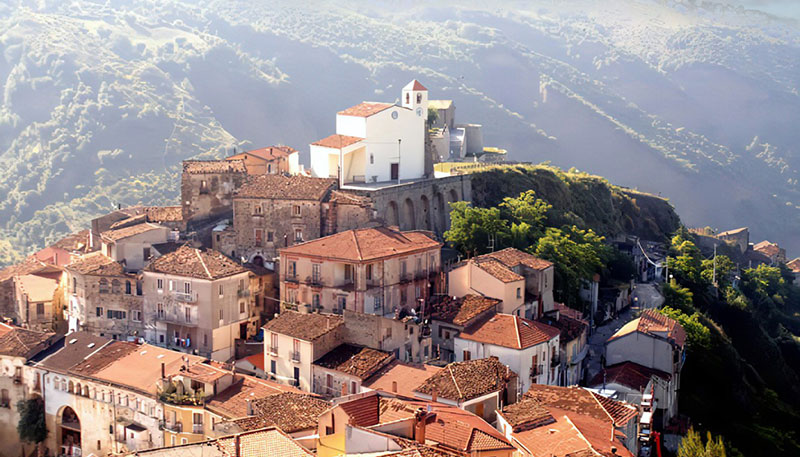
The village's devotional route then leads to the 18th-century Sanctuary of the Madonna della Stella, immersed in a fascinating mountain landscape, which looks like a small chapel set in the rock, surmounted by a large crucifix that dominates the surrounding landscape. Every year, on the second Sunday in May and 8th September, this sacred place becomes the destination of an intense pilgrimage.
The village is also home to the Bishop's Palace, the summer residence of the Bishop of Tricarico, which over time has contributed to making Armento a religious centre of great spiritual intensity. In addition, the ruins of the palace of the Roman consul Terenzio Lucano, who stayed there, can still be seen today in the locality of 'Casale'.
One of the most fascinating treasures in the Armento area is the archaeological site of Serra Lustrante, discovered in the last decades of the 20th century and considered fundamental for understanding the relations between the indigenous populations and the Magna Graecia world between the 4th and 3rd centuries BC. Research has revealed a unique religious complex, divided into two terraces connected by a spectacular staircase in perfect Hellenistic style. Among the most significant finds were the club and leontè, the typical attributes of Heracles, elements that confirm the sanctuary's dedication to the hero-god, protector of warrior values, youth and great athletic achievements. Archaeological sources also show a possible association of the cult with a female deity linked to water, probably Mephitis.
Serra Lustrante, in addition to its archaeological value, is now a key place for understanding the religious history of the ancient populations of Basilicata and the relationships between different cultures in the heart of the Lucanian Apennines.