

Marsicovetere
Among the highest villages in Basilicata
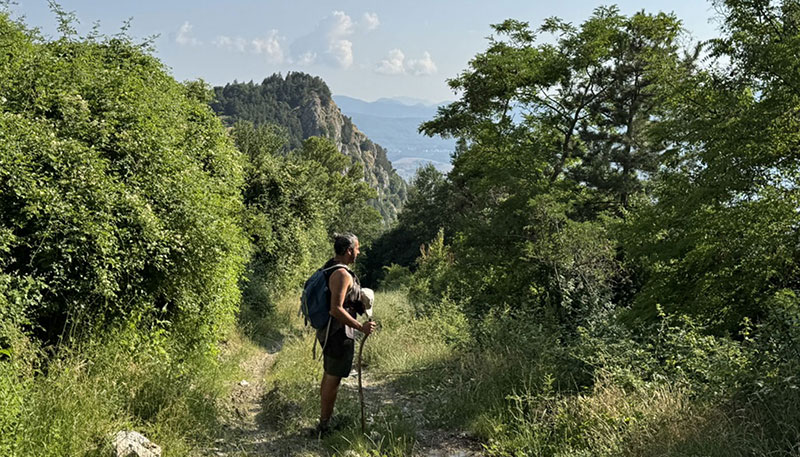
Perched at an altitude of over 1,000 metres, Marsicovetere dominates the Val d'Agri like a natural balcony overlooking the Volturino, Sirino and Maddalena mountains. From here, the view sweeps over valleys, ridges and plateaus suspended between beech woods and sunlit glades. The slopes of Volturino, the springs and waterways that encouraged Roman and medieval settlements, and the paths that cross pastures and rocky areas, make up an ideal landscape for trekking, hiking and nature watching.
Its origins lie in the Roman world and in the memory of the Marsi, a population from Abruzzo who settled here, leaving their name to the village. The history of the village is reflected in its stone houses, narrow streets, noble palaces and places of worship, which tell the story of centuries of devotion and transformation. In the upper part of the village, the tower of the ancient castle (11th century), the two gates to the fortress and an ancient windmill are still visible. Among the palaces, Palazzo Piccini D'Ottavio stands out, once owned by the Caracciolo family, inside which stands the private chapel of Sant'Antonio Abate. Here, a refined wooden statue of the saint, sculpted in Naples in 1826, is preserved and is the protagonist of the festival that enlivens the village every year at the beginning of June. The Mother Church of Saints Peter and Paul, built in the 14th century and later remodelled in the Baroque style, houses side chapels that once belonged to the most influential families, a precious wooden choir, a 16th-century holy water font and 18th-century paintings from the Neapolitan school. At the centre of local devotion is the 18th-century statue of the Madonna dell'Assunta, carried on a summer pilgrimage to the sanctuary on Mount Volturino, where the landscape seems to merge with the sky.
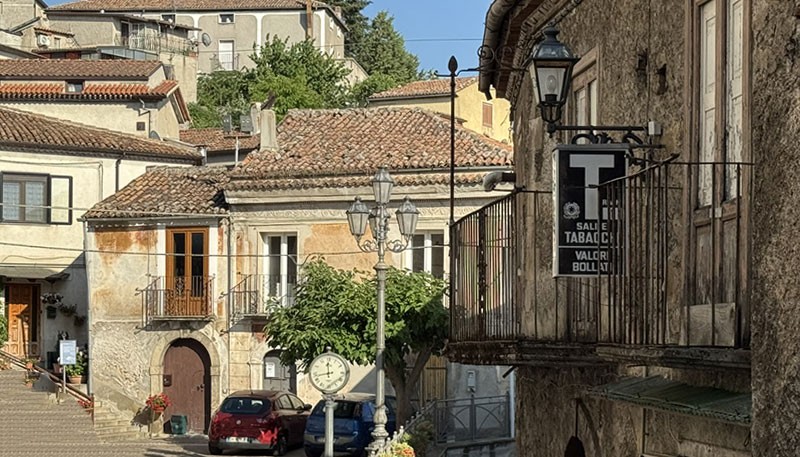
At the foot of the historic centre are the ruins of the 16th-century Convent of Santa Maria di Costantinopoli, once run by the Capuchins, and continuing towards Villa d'Agri, you come across the Convent of Santa Maria dell'Aspro, built in the 14th century, where traces of Franciscan paintings survive. Finally, on a very picturesque rocky spur north of the village, towards Calvello, you can see the Chapel of the Madonna del Saraceno.
The area also preserves important evidence of the past: from medieval traces on Tuppo San Nicola to the remains of the large Roman Villa dei Bruttii Praesentes in the hamlet of Barricelle, a residence linked to the family of Brutia Crispina, wife of Emperor Commodus, and one of the most significant archaeological discoveries of recent years. An imposing residence, divided between a productive area and a residential part, which tells the story of the life of a noble Roman family immersed in the agricultural landscape of the valley.
One of the most fascinating places in the area is the Masso dei Gallesi, a monolith marked with mysterious engravings and shrouded in legendary tales: ancient rites, pre-Roman populations and enigmatic symbols that fuel the curiosity of scholars and visitors alike.
Centuries of history - from Greek monks to Normans, from the Caracciolo family to the uprisings of the 19th century - have shaped the village, which still retains a strong and layered identity today.