Pantano di Pignola
Between the breath of the mountains and the enchantment of a mirror of water
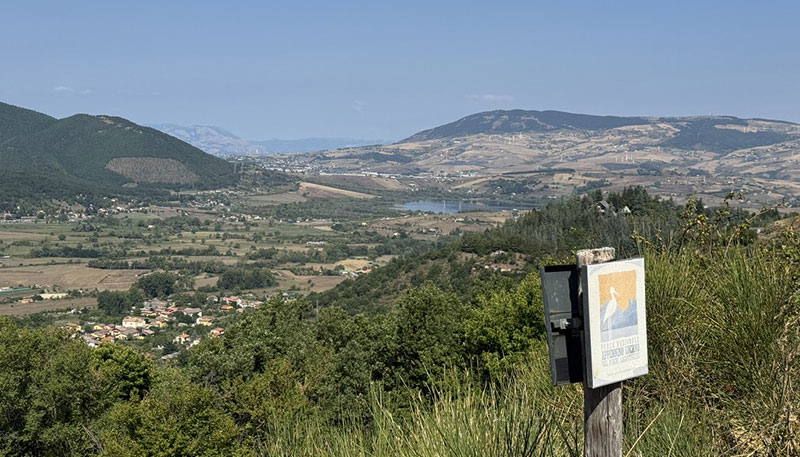
A few kilometres from Potenza, nestled in a natural basin surrounded by the Maddalena Mountains, the rural hamlet of Pantano di Pignola opens up immersed in a suspended landscape. Here, at the foot of mountains over a thousand metres high that are arranged like an amphitheatre, lies Lago del Pantano, a stretch of water that reflects the sky with the ancient calm of a place born from the encounter between nature and human ingenuity. A print from 1702 already places this basin at the gates of the village of 'Vignola' (the ancient name of Pignola), near the church dedicated to the Madonna del Pantano, testifying to how much it was already an integral part of the territory at that time.
The lake, created by an artificial dam built in what was once a marshy area, is a mosaic of green and peaceful environments: reeds, cattails and rushes flourish on the banks, while the waters are home to rich underwater vegetation. Fragile white willows, Neapolitan alders and hybrid poplars form the tree crown that surrounds the reserve, making it a privileged place for those who love to immerse themselves in nature enriched by surprising biodiversity.
Today, Lago del Pantano is a 155-hectare Regional Nature Reserve, a true birdwatching paradise, a green lung that welcomes visitors, scholars, hikers and simple lovers of silence.
Pantano is also the guardian of an agricultural history that has its roots in centuries past. Among the products that have marked the area's culinary identity, the red bean stands out, an ecotype that is now a Slow Food Presidium. It is said that it was already present in the upper Basento valley even before the arrival of the Spanish from the Americas. During the Napoleonic era, it became a staple food for peasant families, as reported in the Statistica Murattiana of 1811. Between the 19th and early 20th centuries, cultivation experienced a golden age, so much so that it was presented at the 1923 Trade Fair in Naples.
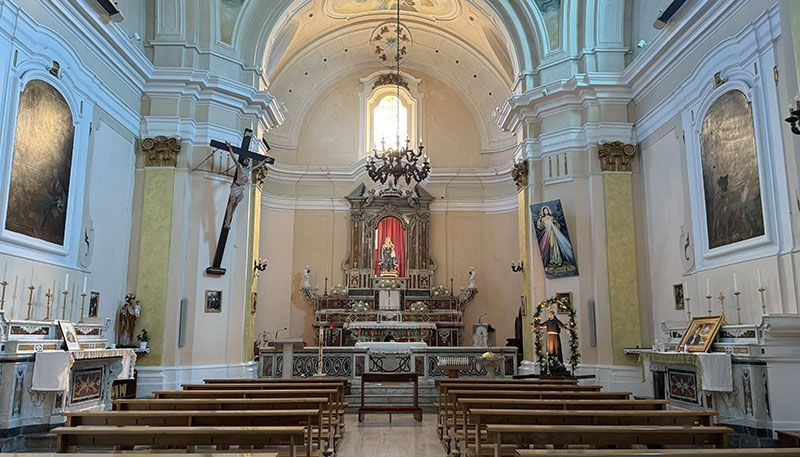
In the rural centre of the hamlet of Pantano, not far from the lake, is the Sanctuary of the Madonna degli Angeli (also known as Madonna del Pantano), a place of worship that houses the precious wooden statue of the Madonna degli Angeli (1577-1587), the work of Geronimo Arnone, whose features are moving for the sweetness of her face, her starry blue mantle and the blessing Child resting on the Virgin's knees. In May, the statue is accompanied to the Mother Church of Pignola with the traditional procession of the 'Uglia', passing through the streets of the village between imposing bonfires of broom, the 'fanoie', veritable barriers of fire that slow down the procession in a ritual that represents the eternal struggle between good and evil. The bearers, amid dancing and wine, cross the burning embers in a crescendo of emotion that transforms the procession into a powerful representation of identity. In September, the Madonna returns to the Sanctuary.