

Paterno
A landscape that changes colour
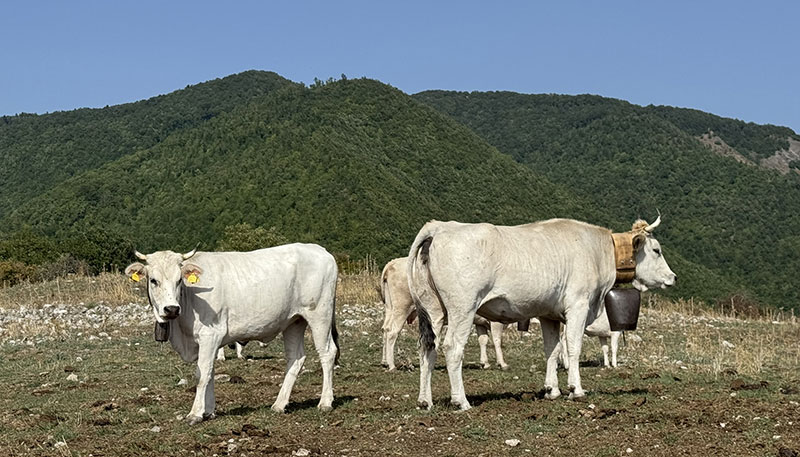
Paterno, which until 1973 was a hamlet of Marsico Nuovo, stands in the great plain that crosses the heart of the Val d'Agri and which, when viewed from nearby Monte Amoroso, opens up like a mosaic of cultivated fields, woods and rolling hills. From up there, the view stretches far into the distance, as far as the Certosa di Padula in Campania, across one of the widest and brightest views of the Lucanian Apennines. It is a constantly changing landscape: peaks give way to hills, hills stretch out into fertile plains, and the vegetation alternates between dense shadows and golden expanses. Here, the Lucanian Apennines Val d'Agri Lagonegrese National Park provides the backdrop to an unspoilt environment, criss-crossed by paths, springs and sinkholes carved out of the limestone rocks of the massif by water, a privileged place for the study of biodiversity.
The origins of Paterno date back to the Iron Age, while the name Paternicum - 'land of the fathers' - tells a distant story, linked to the first communities that lived near today's church of San Giovanni Evangelista. In Roman times, the area was dotted with rustic villas, as evidenced by the remains found in Aggia and at the archaeological site of Valle Romana, where excavations in the 1960s brought to light some valuable finds.
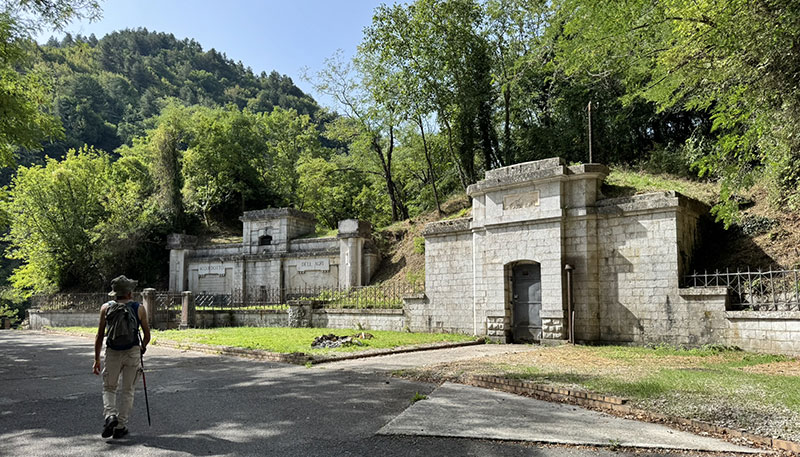
The current town is a network of alleys and courtyards leading to stately buildings and small chapels. The historic architecture offers fascinating views: among these, Palazzo Arco della Volpe stands out, with its arched structure under which the road connecting an ancient district once passed; the majestic Palazzo Rautiis, built in the 19th century as a country house, with side towers and imposing stone walls; and Parco Navarra, a country farmstead with two stone towers and a large arch at the entrance. Also worth seeing is the so-called Palazzo dell’Acquedotto, a highly charming architectural complex in the Rationalist style, which was the historic headquarters of the Acquedotto Lucano, flanked by a striking fountain made of local stone, where water still flows today from imposing lion’s mouths.
The religious centre of Paterno is the Mother Church of San Giovanni Evangelista, which can be reached through a dense network of narrow streets that climb like a staircase through the village and houses a wooden crucifix from the 1700s. On a small hill stands the Church of San Rocco, a landmark of the Raia district. Not far away, the Church of the Sacred Heart surprises visitors with its natural cave, which houses a delicate statue of the Madonna. Leaving the village, in the locality of Pecci Piazzolla, you will find the Church of San Bartolomeo and the private chapel attached to Palazzo Rautiis, an architectural complex that ideally extends the devotional route through the countryside, as does the Chapel of the Immaculate Conception.
This is also what Paterno is: a village that combines ancient history, landscapes that change with each season and sacred places that preserve the memory of an ancient community, reborn as an autonomous municipality just over fifty years ago, but strong in its millennial roots.