

Sarconi
In the green heart of Val d'Agri
Sarconi is located in the most fertile and luminous part of Val d'Agri, between the Volturino and Sirino mountains, in a landscape that alternates between cultivated fields, lush woods and wide horizons of water. The village is one of the municipalities that fall within the Lucanian Apennines Val d'Agri Lagonegrese National Park, nestled between two large protected areas, Pollino and Cilento. Here, nature offers itself in all seasons as an ideal space for trekking, cycling and leisurely walks, along paths that cross chestnut and beech woods and lead to Lake Pertusillo. The artificial reservoir, created by damming the Agri River, is now an oasis of extraordinary natural value, loved by birdwatchers and sport fishermen. Around its shores, chestnut and beech woods accompany visitors in a quiet and harmonious environment, where water and greenery blend in a surprising balance.
The origins of Sarconi date back to Roman times and are closely linked to nearby Grumentum, an important colony of ancient Lucania. According to some scholars, Sarconi was founded as an agricultural suburb of the Roman city, as confirmed by archaeological finds in the area, including the graves of Carthaginian and Roman soldiers, the remains of rustic villas in Cammarelle and traces of an aqueduct that connected the two centres.
During the Middle Ages, the town came under the rule of important feudal families, including the Sanseverino and Pignatelli families, experiencing alternating phases of growth and difficulty. The year 1806 was dramatic, when Sarconi became one of the centres of anti-French resistance in Val d'Agri, paying a very high price in terms of devastation and repression. Walking through the village today, you can sense the authentic soul of Sarconi among the narrow streets, stone portals, wrought-iron balconies and rural architecture that tell the story of a peasant civilisation deeply connected to the land.
Only a few traces remain of the ancient Mother Church, which was destroyed by the devastating earthquake that shook the entire Val d'Agri in 1857. The church was rebuilt between the end of the 19th century and the early 20th century on the same site as the original church, an elegant Renaissance building dedicated to the Holy Trinity. The new church, dedicated to Santa Maria in Cielo Assunta, with its vaulted ceiling, recalls the style and models of 18th-century Neapolitan architecture. In addition to the Mother Church, the 15th-century Chapel of Santa Lucia preserves a precious fresco depicting the Madonna and Child and a 17th-century triptych.
Not far from the town centre is the Sanctuary of Santa Maria di Montauro, the spiritual heart of the community, which houses a 16th-century wooden statue of the Virgin Mary seated on a throne with the blessing Child.
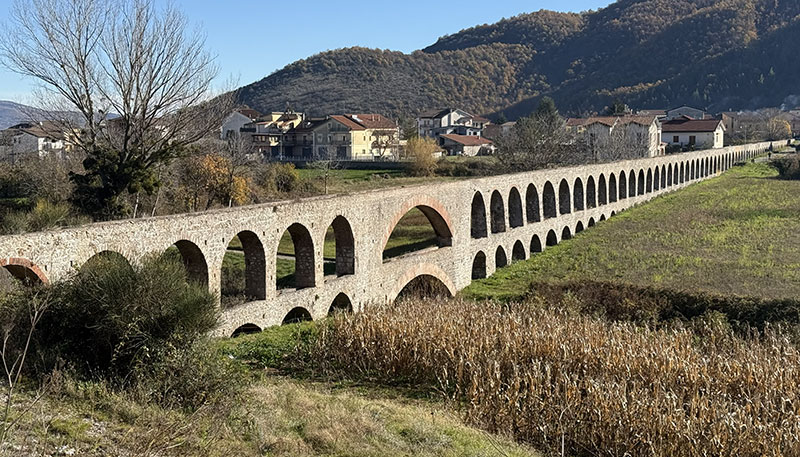
Among the most evocative civil landmarks are the remains of the Cavour Canal, an imposing hydraulic work dating back to 1867, built in Roman style with harmonious arches and a double irrigation canal that for decades fed the fields of Sarconi and Moliterno.
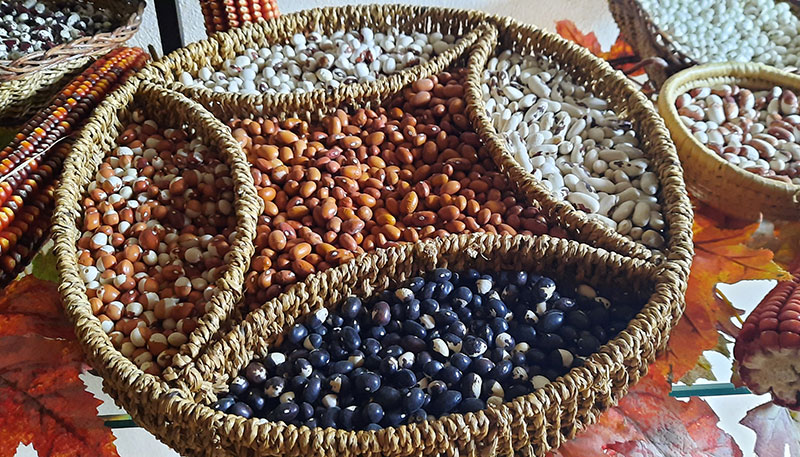
Alongside its history, Sarconi boasts an excellent gastronomic tradition, embodied in the famous Sarconi IGP beans, the stars of the local cuisine and celebrated every summer with a festival that attracts visitors from all over the region.