

Satriano di Lucania
Where history becomes landscape and tradition takes shape
Satriano di Lucania is located in the Melandro area, in the province of Potenza, and is immersed in the extraordinary scenery of the Lucanian Apennines Val d'Agri Lagonegrese Park. In the woods surrounding the town, such as the picturesque Bosco Ralle, dominated by imposing beech trees, it is not uncommon to come across traces of the fauna typical of the Lucanian Apennines. The rich vegetation is equally remarkable and makes the area ideal for nature excursions, trekking, cycling and horse riding, as well as for relaxing in the equipped green areas and near fountains, artificial lakes and springs.
The Satriano area is home to the characteristic Lucanian cliffs, limestone rock faces immersed in a wild and unspoilt environment, much appreciated by rock climbing enthusiasts. No less fascinating are the paths leading to the Fontana delle Brecce or the artificial lake of Bosco Ralle, a favourite destination for sport fishing and families seeking nature and tranquillity.
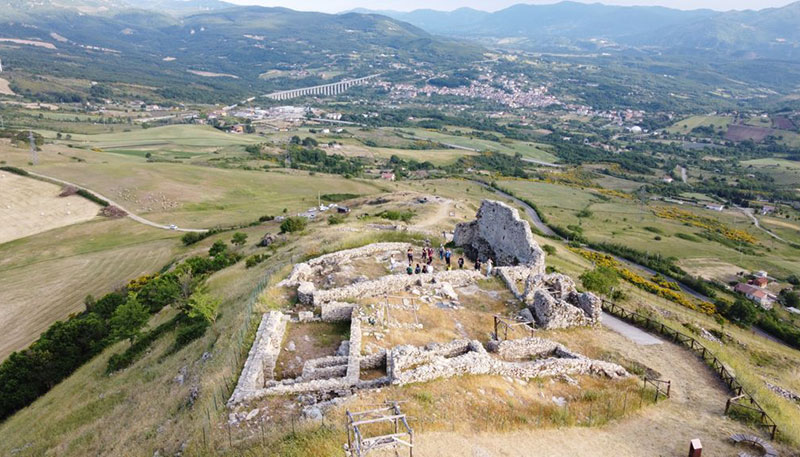
The history of Satriano di Lucania has its roots in an ancient past: traces of human settlement have been found dating back to the second millennium BC. The ancient Satrianum, a Lombard stronghold and later a Norman county and bishopric, stood on the hill now known as Torre di Satriano, in the municipal area of Tito. This archaeological site, which has been the subject of major excavation campaigns, has yielded evidence of continuous habitation from the Bronze Age to the late Middle Ages. Among the most significant finds are locally produced ceramics and those of Hellenic influence, burial areas, remains of dwellings, a medieval bishop's cathedral and a Lucanian sanctuary from the 4th-3rd century BC, built near a spring and dedicated to a warrior deity. The hill of Satrianum is one of the symbolic places of ancient Lucania, a strategic crossroads between the Tyrrhenian and Ionian seas, between Campania and inland Basilicata.
According to tradition, Satrianum was destroyed between 1420 and 1430 by order of Queen Joanna II of Anjou. Its inhabitants took refuge in nearby towns, giving rise to the development of Pietrafesa, a rural village built close to a 'pietra fessa' (split stone), from which it took its name. During the 19th century, in order to strengthen its link with the ancient medieval settlement, Pietrafesa definitively took the name of Satriano di Lucania.
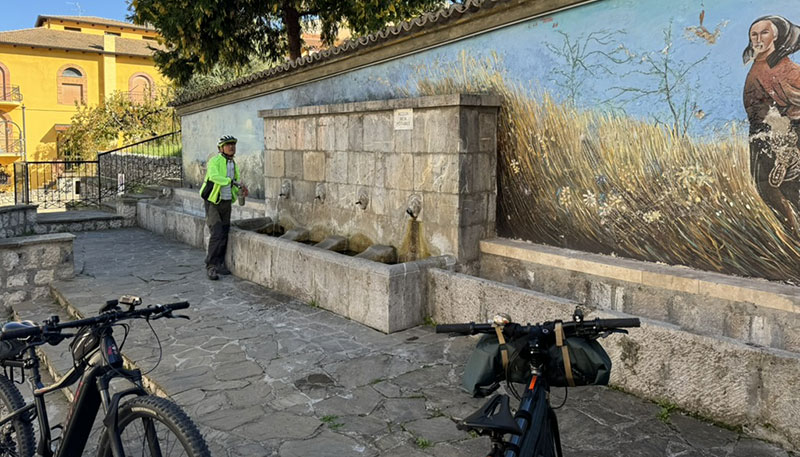
Today's village is a harmonious intertwining of alleys, stairways and open spaces overlooked by 17th- and 18th-century noble palaces, carved stone portals and breathtaking panoramic views. Satriano is known as the 'village of murals': the historic centre is a veritable open-air art gallery, where striking paintings depict everyday peasant life, popular legends and the figure of the village's most illustrious son, Giovanni De Gregorio, known as Pietrafesa, one of the leading exponents of Lucanian painting between late Mannerism and Baroque.
The multimedia museum 'Il Palco dei Colori' (The Stage of Colours), housed in the Rocca Duca di Poggiardo, an ancient noble residence known as the Castle, is dedicated to Pietrafesa. The immersive and multisensory museum tour takes visitors through high-definition images, multimedia installations and digitised works that recount the painter's life and artistic production, with links to 17th-century Lucanian culture. The same building also houses the municipal library and exhibition rooms, while the nearby Palazzo Loreti, an elegant 18th-century residence, is home to the Museum of Rural Life and the Satriano Antica Archaeological Museum, which preserves many of the finds unearthed during the excavations of the Tower of Satriano.
Satriano's religious heritage is particularly rich and bears witness to the profound spirituality of the community. The village is built around the Mother Church of St. Peter the Apostle, rebuilt in the 1950s but embellished by the imposing 37-metre-high 17th-century bell tower, attributed to Bishop Juan Caramuel y Lobkowitz due to the similarity in design. Inside the church are works of great value, including a wooden bust of St. Roch attributed to Giacomo Colombo, wooden altarpieces depicting Our Lady of Sorrows and St. John, and a wooden cross by the sculptor Vincenzo Musner of Ortisei.
The Church of Santa Maria Assunta, also known as the Old Church or Church of Constantinople, is particularly charming. It was built between the 12th and 13th centuries by the Pietrafesa family. Characterised by a medieval tower with a square base, it houses paintings depicting the Madonna del Rosario, the Madonna delle Grazie and the Immacolata, as well as the sarcophagus of Francesco di Pietrafesa, who died in 1300. Not far from the historic centre is the 16th-century Chapel of San Giovanni, which houses one of the very rare frescoes signed by Pietrafesa, dated 1626, depicting the Eternal Father, the Holy Spirit and patron saints, as well as a limestone sculpture of the patron saint.
The Chapel of the Madonna della Rocca, built in the 15th century directly into the rock, is evocative and deeply linked to popular devotion. After part of the building collapsed in 1814, the statue of the Madonna was miraculously found intact, fuelling a devotion that is still very much alive today. The church, which has been enlarged over time, dominates one of the most spectacular viewpoints in the village and is shrouded in legends, such as that of the bell capable of warding off storms.
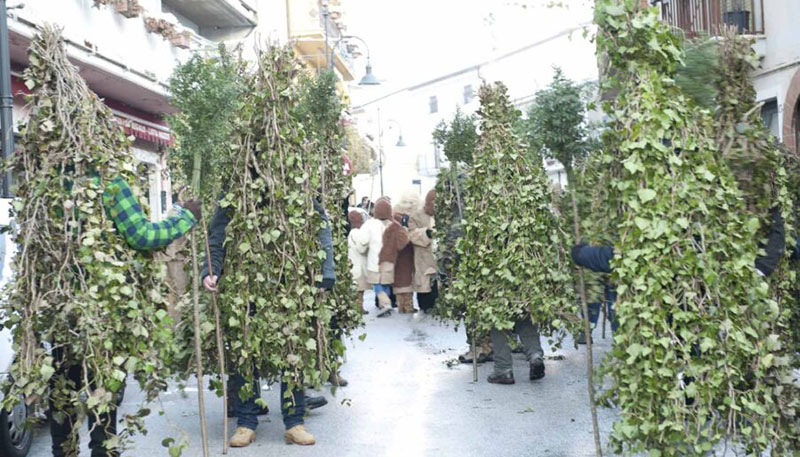
Satriano di Lucania is also the guardian of one of the most fascinating traditions in Basilicata: the Carnevale dei Rumit. Every year, during Carnival, Satriano revives the tradition of the Rumita, the tree man, an archaic mask with roots in a rural and sylvan past, when solitary figures, similar to hermits, lived in ivy-covered woods in total symbiosis with nature. At the end of winter, the rumita would come down to the village to ask for food in exchange for good luck, symbolically marking the return of fertility and life. This custom, which has never been interrupted, has found new strength in the 21st century, transforming itself from an individual gesture to a collective ritual. Since 2012, the solitary figure of the tree man has multiplied to become a veritable 'walking forest': 131 rumita, one for each municipality in Basilicata, parade silently through the streets of the village, sending a powerful message of harmony between man and the environment. Alongside the rumita, there are other traditional masks, such as the Bear, a symbol of strength and social redemption, Lent, emblematic of the transition from carnival chaos to order, and Zita, who stages the reversal of male-female roles through a ritual marriage.
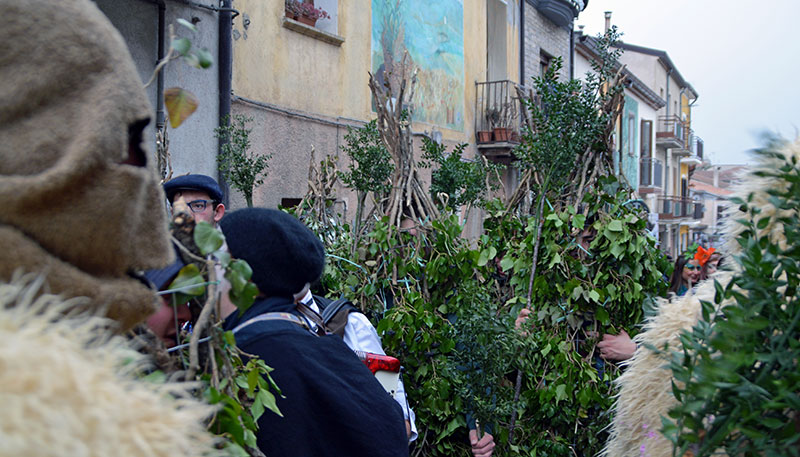
Recognised in 2021 as one of Italy's historic carnivals, Satriano's carnival is now considered one of the most authentic and symbolically rich rituals on the national scene, combining memory, identity and ecological awareness.
Between nature, archaeology, art and ancestral rites, Satriano di Lucania reveals itself to be an authentic and surprising place, capable of recounting, in every season, the deepest soul of Basilicata.